
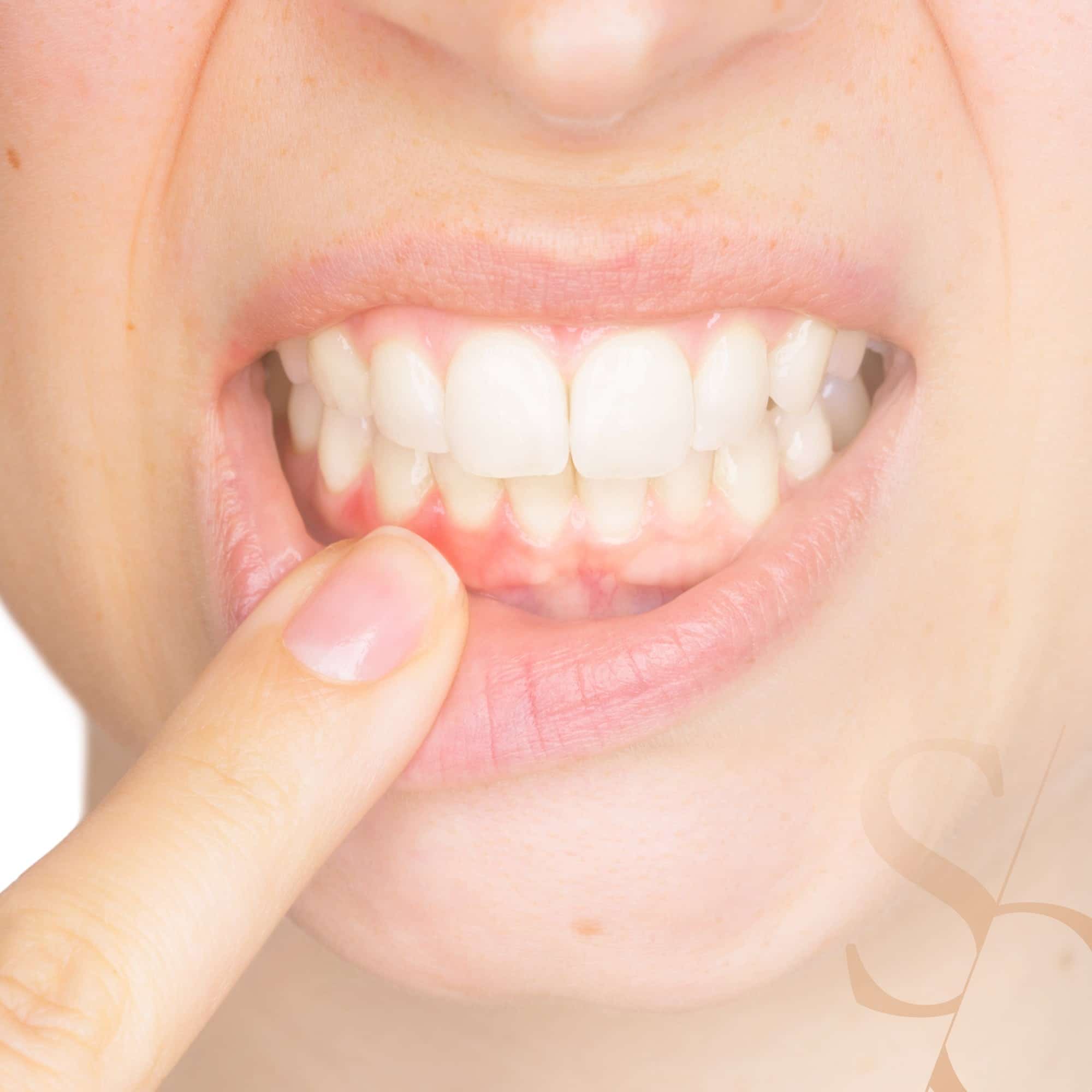
In general, the main cause of gingivitis is the accumulation of dental plaque at the gum/tooth junction. This makes it easy for a bacterial infection to form, in this case caused by bacteria accumulated between the tooth and the gum, triggering inflammation of the gum tissue.
There are many causes of periodontal disease, the most common being:
- poor oral hygiene, for example by using a toothbrush with bristles that are too stiff;
- Alcohol consumption and smoking are also aggravating factors.
- genetic predispositions that promote the accumulation of dental plaque;
- frequent hormonal fluctuations during pregnancy or menopause.
The cause of gingivitis can also be underlying. Indeed, diseases such as diabetes also cause gingivitis.
Good to know: Certain medications, particularly those that cause dry mouth, can increase the risk of gingivitis by promoting bacterial growth.
Therefore, given that there are various causes, a medical diagnosis is necessary to determine the sources of gingivitis.
Our discussions with online visitors
Sana Oris
Published on March 7, 2024
Bonjour,
Dans votre cas, je vous recommande vivement de prendre rendez-vous avec l’un de nos chirurgiens-dentistes pour bénéficier d’un examen dentaire approfondi. Cela permettra d’identifier la cause de votre douleur et de la traiter efficacement. Étant donné la diversité des symptômes que vous présentez, les causes peuvent être multiples. Il est également essentiel de réaliser une radiographie panoramique, car la source du problème pourrait être interne et donc non détectable à l’œil nu. Vous pouvez appeler notre secrétariat au : 01 80 27 44 00 – Paris 04 / 01 82 73 14 00 – Paris 08.
Bonne journée
Pau
Published on November 20, 2023
Bonjour après un détartrage chez un dentiste, il m’indique que deux dents bougent , pouvons nous les sauver?? En sachant que j’ai une mutuelle, est ce que tout est pris en charge par celle ci
Sana Oris
Published on November 30, 2023
Bonjour,
Je comprends votre inquiétude, cependant, je ne peux vous fournir une réponse précise, car cela dépend des détails de remboursement de votre mutuelle, que vous seul pouvez connaître. Dans votre situation, je vous conseille de prendre rendez-vous avec l’un de nos parodontistes pour vérifier si le déchaussement dentaire est lié à une parodontite (maladie parodontale) à l’aide d’un bilan parodontal. En cas de parodontite, trois options s’offrent à vous : le traitement au laser pour soigner l’infection bactérienne et recoller la gencive à votre dent, traitant ainsi la récession gingivale ; ou bien, si la récession est trop importante, cela pourrait nécessiter une greffe de gencives ou une greffe osseuse pour sauver vos dents naturelles. Dans les cas plus graves, l’implantologie pourrait être envisagée, mais cela dépend de divers facteurs tels que la raison du déchaussement dentaire (maladies parodontales, chocs, etc.) et l’étendue du problème. Dans tous les cas, sachez que notre clinique privilégie autant que possible des soins non invasifs, mettant l’accent sur la préservation de vos dents naturelles dès que cela est possible.
Bonne journée
Denisse
Published on October 18, 2023
Bonjour, quel est le tarif d’une chirurgie au laser sur toute la bouche pour la gingivite ? combien par séance si l’objectif est la bouche pleine ?
Sana Oris
Published on October 19, 2023
Bonjour,
Je ne peux pas vous donner une réponse précise, car le coût dépendra du nombre de séances de laser nécessaires. Pour déterminer cela, il est nécessaire de réaliser un bilan parodontal afin d’évaluer l’état de votre santé parodontale, c’est-à-dire le degré d’infection. Le nombre de séances sera ajusté en fonction de l’étendue de l’infection, et vous recevrez un devis détaillé à la suite du bilan parodontal.
Bonne journée
Mouly
Published on September 6, 2023
Bonjour je souffre des gencives sa serai pour faire de la parodentie j’ai que la cmu esceque vs prenez en charge avec la cmu ou c’est payant ?
Sana Oris
Published on September 6, 2023
Bonjour,
Bien sûr, en cas de ressenti de douleurs au niveau de vos gencives, je vous encourage vivement à planifier une consultation parodontale pourfaire un bilan parodontale avec l’un de nos spécialistes en parodontie. Pour ce faire, je vous suggère de contacter directement notre secrétariat (01 80 27 44 00 Paris 04 / 01 82 73 14 00 Paris 08), qui se fera un plaisir de répondre à toutes vos interrogations et de vous guider à travers le processus de remboursement.
Bonne journée
Nait
Published on December 19, 2022
Bonjour
Je souhaiterais savoir si vous faite la méthode pinhole pour les gencives car j’ai peur de l’opération